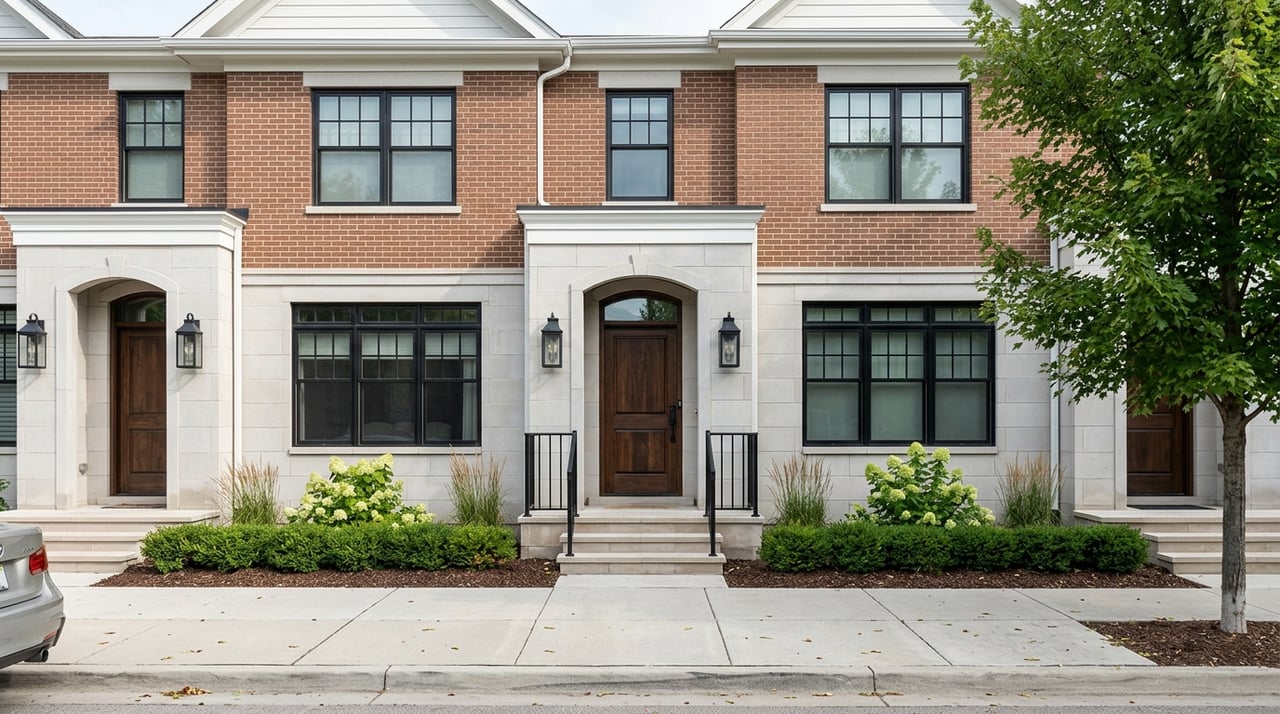
Looking for a home in Clayton but not excited about mowing a yard, handling exterior upkeep, or managing a lot of space you may not need? Condo and townhome living can be a smart fit here, especially if you want a close-in location, easier day-to-day maintenance, and access to transit, parks, and local amenities. If you are weighing attached living against a detached home, this guide will help you understand what to expect in Clayton and how to make a confident decision. Let’s dive in.
Why Clayton fits attached living
Clayton offers a rare mix of suburban address appeal and urban-style convenience. The city covers about 2.5 square miles, and Clayton reports that 81% of its land is devoted to residential or park use. At the same time, the central business district includes about 7,000,000 square feet of office space and 1,000,000 square feet of retail space.
That balance helps explain why condos and townhomes work so well here. You can find residential pockets near a busy, walkable center rather than in one isolated development. Clayton’s current planning direction also emphasizes walkable development and additional residential options near the city center, which supports the appeal of attached homes.
Clayton is also the seat of St. Louis County, which adds to its practical appeal for many buyers. For people relocating or staying close to the metro core, the city offers a strong public-services setting with a well-established local identity.
What daily life looks like
One of Clayton’s biggest advantages is how much it packs into a small footprint. If you want a home where errands, dining, work, recreation, and transit feel closer together, attached living here can make a lot of sense. That is especially true if you are looking for a lock-and-leave lifestyle.
Walkability and transit
Clayton’s downtown core is more transit-friendly than many suburban markets. The city has two MetroLink stations serving Clayton, and the central business district station connects by pedestrian walkway to Central Avenue and the Shaw Park Drive Garage. That same garage also includes the Clayton MetroBus Center, which makes transfers easier.
If you work in or near the central corridor, this setup can reduce how often you rely on your car. For some buyers, that is a major lifestyle upgrade. For others, it simply adds flexibility on busy weekdays or during events.
Parks and recreation
Clayton also offers a dense amenity base for its size. The city manages 12 parks and operates recreation assets that include the Shaw Park Aquatic Center, Shaw Park Tennis Center, and Clayton Dog Park. It also co-owns and operates the Center of Clayton with the school district.
The Center of Clayton includes gymnasiums, pools, an indoor track, a climbing wall, and community-oriented spaces. If you want convenient recreation without maintaining a large property, this kind of local infrastructure can be a real benefit.
Parking and day-to-day logistics
Parking matters more in condo and townhome living than many buyers expect. In Clayton, parking is enforced Monday through Friday from 8 a.m. to 5 p.m. at $1.50 per hour, and payment can be made through PassportParking. The city also offers a residential parking program, including digital permits in certain zones, along with a resident parking discount program for eligible drivers.
That does not mean parking is automatically difficult. It does mean you should pay close attention to how parking works at the specific building or block you are considering. A great floor plan can feel very different if guest parking, garage access, or permit rules do not fit your routine.
What Clayton condos and townhomes look like
One of the most important things to know about Clayton is that attached-home inventory is not one-size-fits-all. Because these homes are spread across established streets and mixed-use corridors, you will see more variety in layout, age, and amenities than in a typical master-planned community.
Condo layouts in Clayton
Recent listing snapshots show a broad condo range. You may find smaller urban units around 1,000 to 1,200 square feet, mid-size two-bedroom units around 1,400 to 1,600 square feet, and larger condos above 2,000 square feet. Some listings also mention secure parking garages, while others highlight older-building details such as fireplaces.
That range is useful if you are trying to match your home to your lifestyle. Some buyers want a compact footprint near the heart of Clayton. Others want generous interior space with fewer exterior responsibilities than a detached home.
Townhome layouts in Clayton
Townhome-style homes in Clayton often live more like houses than starter homes. Recent examples include three-bedroom homes around 2,000 to 2,500 square feet, along with detached or semi-detached townhome formats with three stories, private lanes, attached garages, and primary suites with multiple walk-in closets.
If you want more square footage but still prefer lower-maintenance living, this can be an appealing middle ground. A townhome may give you the feel of a single-family property while reducing some of the upkeep that comes with a standalone home.
Where attached homes tend to cluster
Recent listing activity has clustered around Brentwood, Hanley, Wydown, and downtown-adjacent addresses. That pattern reinforces the idea that Clayton’s condo and townhome market is tied closely to location and lifestyle. Some homes lean more urban in feel, while others sit on quieter established streets.
Because of that, your experience can vary a lot from one property to the next. Two attached homes in Clayton may offer very different parking setups, building ages, amenity packages, and street environments. That is why hyper-local guidance matters.
Who condo and townhome living suits
Attached living is usually about tradeoffs, not shortcuts. You may give up some privacy or exterior control, but in return you often gain convenience, less routine maintenance, and an easier travel-friendly setup. For the right buyer, that trade can be absolutely worth it.
In Clayton, this lifestyle often fits buyers who value:
- Less yard work and exterior upkeep
- A lock-and-leave home for travel or busy schedules
- Close access to work, transit, parks, and amenities
- A more compact or efficient footprint
- House-like space without all the maintenance of a detached home
This can appeal to relocating professionals, first-time buyers who want a central location, and downsizers who want to simplify. It can also work well for buyers who want to stay in Clayton but do not need a large detached property.
What to compare before you buy
A lower-maintenance home does not always mean a lower total monthly cost. Condo or HOA dues are usually paid separately from your mortgage, and they can range from a few hundred dollars to more than $1,000 per month depending on the property. Those fees often cover items like landscaping, routine maintenance, shared-area upkeep, and amenities.
That is why it is important to look beyond the purchase price. In some cases, a condo or townhome may cost less upfront than a detached home, but monthly dues, parking costs, and building-specific responsibilities can change the full picture.
Key due diligence items
Before you move forward on a condo or townhome in Clayton, make sure you review:
- HOA or condo association budget
- Monthly dues and what they cover
- Reserve funding
- Association rules and restrictions
- Master insurance coverage
- Parking arrangements for residents and guests
These details can affect your monthly expenses, financing options, and long-term repair risk. They can also shape your day-to-day satisfaction once you move in.
Condo or townhome vs. detached home
If you are still deciding, it helps to compare the lifestyle side by side.
| Home Type | Often Best For | Things to Watch |
|---|---|---|
| Condo | Buyers who want minimal exterior maintenance and a more compact footprint | HOA dues, rules, parking, shared spaces |
| Townhome | Buyers who want more space and a house-like layout with less upkeep | HOA structure, stairs, garage setup, monthly costs |
| Detached Home | Buyers who want a private yard, more storage, and fewer shared rules | More maintenance, more exterior responsibility, often more upkeep costs |
There is no universal best choice. The right option depends on how you want to live, how often you travel, how much upkeep you want to handle, and how important location is to your routine.
How to shop smart in Clayton
In Clayton, attached homes vary widely, so the smartest search is a focused one. Instead of asking only, “How many bedrooms do I need?” ask how you want your week to feel. Do you want to walk to more destinations, rely less on your car, or lock the door and leave town with less stress?
It also helps to define your non-negotiables early. For example, you may want attached garage parking, elevator access, secure entry, fewer stairs, or a larger primary suite. When inventory is varied, clarity helps you move quickly on the right fit and avoid compromise on the features that matter most.
If you are thinking through Clayton condo or townhome options, working with someone who understands the differences from block to block can save you time and help you compare properties more accurately. For tailored guidance on buying or selling in Clayton, connect with Michelle Gegg.
FAQs
What makes Clayton a good place for condo and townhome living?
- Clayton combines a compact layout, a busy central business district, residential neighborhoods, parks, transit access, and a wide range of local amenities, which makes attached living practical for many buyers.
What kinds of condos are available in Clayton, MO?
- Recent Clayton condo listings have ranged from smaller units around 1,000 to 1,200 square feet to larger homes above 2,000 square feet, with features that may include secure parking garages or older-building details like fireplaces.
What are Clayton townhomes usually like?
- Clayton townhomes often offer more house-like layouts, with recent examples around 2,000 to 2,500 square feet and features such as three stories, attached garages, private lanes, and large primary suites.
Is Clayton easy to navigate without a car?
- In the downtown core, it can be easier than in many suburban markets because Clayton has two MetroLink stations, a MetroBus Center, and pedestrian connections in the business district.
What should you review before buying a condo or townhome in Clayton?
- You should review the HOA budget, monthly dues, reserve funding, association rules, master insurance coverage, and the property’s parking setup before making a decision.
Are condos and townhomes in Clayton always more affordable than detached homes?
- Not necessarily. A lower purchase price can be offset by HOA dues, parking costs, and other property-specific expenses, so it is important to compare the full monthly cost.
